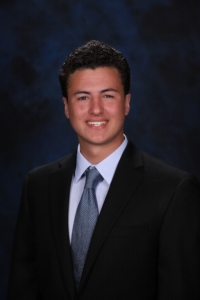
Biography: Jacob’s life is in great part, fueled by the relationship he had with his father. Almost every night when he was growing up, his dad would read to him before he went to bed. While the characters and settings varied slightly, they always told stories of grand adventures, driven by heroes traveling through unknown lands and defeating the challenges they faced. Some of the tales he remembers best were from the Magic Tree House collection, one of the first book series he ever read with his dad. His dad and he would also create stories of their own, like having his stuffed animals go on quests, traversing the uncharted lands of his bedroom. He wishes he could tell even more stories of the books they read, but in the summer before sixth grade, his father passed away. His guide to the unknown worlds within the pages of books and, more importantly, to the real one in which he lived was gone. He was determined to make his father proud trying as hard as he could throughout high school. He attended Brentwood School where he was valedictorian, concertmaster of the orchestra, founder of the school’s first esports team, and creator of the social entrepreneurship club. He also played water polo and swam for all four years. Apart from academics, he created his own video game startup, interned at the Motion Picture Corporation of America, and is currently working on the development of a film startup. He is currently a sophomore at UCLA studying Business Economics and is looking forward to what the future may hold for him.
Future Plans: This summer, Jacob was fortunate enough to be chosen to be an intern in a selective group at Grandview LA. Grandview is a talent management company where he will be able to pursue both his interests in business and in film, gaining priceless skills in each. After college, he hopes to get a job in either consulting, film production, or a similar field in order to gain foundational business knowledge. At any point during this process, or after, his dream would be to create his own company producing things that will inspire others and create a positive impact in their lives. Once he comes up with a strong enough idea, he will begin pursuing it and stay on that track for as long as it takes.
What this scholarship means to me: This scholarship means more to me than just financial aid. It represents being able to take opportunities to further my education and career without a substantial financial burden. My brother will also be entering college soon, and without scholarships, I was worried he would not be able to go without entering serious debt. Without these worries, I will be able to be more motivated and focused on my schoolwork. Additionally, with my interest in entrepreneurship, I would also possibly be able to pursue my dreams of starting my own company. This summer, I was able to gain a selective internship, however, it is unpaid, so this scholarship will be even more valuable to me.


Jacob Galant
/in Uncategorized /by Lauren BurgerBiography: Jacob’s life is in great part, fueled by the relationship he had with his father. Almost every night when he was growing up, his dad would read to him before he went to bed. While the characters and settings varied slightly, they always told stories of grand adventures, driven by heroes traveling through unknown lands and defeating the challenges they faced. Some of the tales he remembers best were from the Magic Tree House collection, one of the first book series he ever read with his dad. His dad and he would also create stories of their own, like having his stuffed animals go on quests, traversing the uncharted lands of his bedroom. He wishes he could tell even more stories of the books they read, but in the summer before sixth grade, his father passed away. His guide to the unknown worlds within the pages of books and, more importantly, to the real one in which he lived was gone. He was determined to make his father proud trying as hard as he could throughout high school. He attended Brentwood School where he was valedictorian, concertmaster of the orchestra, founder of the school’s first esports team, and creator of the social entrepreneurship club. He also played water polo and swam for all four years. Apart from academics, he created his own video game startup, interned at the Motion Picture Corporation of America, and is currently working on the development of a film startup. He is currently a sophomore at UCLA studying Business Economics and is looking forward to what the future may hold for him.
Future Plans: This summer, Jacob was fortunate enough to be chosen to be an intern in a selective group at Grandview LA. Grandview is a talent management company where he will be able to pursue both his interests in business and in film, gaining priceless skills in each. After college, he hopes to get a job in either consulting, film production, or a similar field in order to gain foundational business knowledge. At any point during this process, or after, his dream would be to create his own company producing things that will inspire others and create a positive impact in their lives. Once he comes up with a strong enough idea, he will begin pursuing it and stay on that track for as long as it takes.
What this scholarship means to me: This scholarship means more to me than just financial aid. It represents being able to take opportunities to further my education and career without a substantial financial burden. My brother will also be entering college soon, and without scholarships, I was worried he would not be able to go without entering serious debt. Without these worries, I will be able to be more motivated and focused on my schoolwork. Additionally, with my interest in entrepreneurship, I would also possibly be able to pursue my dreams of starting my own company. This summer, I was able to gain a selective internship, however, it is unpaid, so this scholarship will be even more valuable to me.
Trevor Gadsby
/in Uncategorized /by Lauren BurgerBiography: Trevor Gadsby is majoring in Business Economics with a minor in Accounting and a concentration in the Benjamin Graham Value Investing Program. He is currently a teaching assistant for undergraduate accounting classes at the UCLA Anderson School of Management. Trevor holds numerous leadership positions in clubs at UCLA including the Alumni Scholars Club where he is the Director of Alumni Relations. He is also involved in business clubs, such as Bruin Asset Management. He balances all of this while working as a private equity intern throughout the year. Trevor loves to help others and is an excellent problem solver. In his free time, he loves cooking, paddle boarding, golfing, and attending UCLA sporting events.
Future Plans: Trevor has accepted a position as an Investment Banking Summer Analyst following his Junior year. He aims to utilize his business, finance, accounting, and leadership skills in his future career. Trevor also plans to continue his ties to UCLA after he graduates by giving back and supporting future students.
What this scholarship means to me: I am truly thankful, and I appreciate the Harold R. Mortenson fund donors and the Department of Economics for recognizing me with this honor. From the amazing UCLA Professors, engaging classes, and these great scholarship opportunities, being a part of the UCLA Business Economics program has been an amazing experience. Each day I feel encouraged and supported, and I feel inspired to give back to UCLA in scholarships one day.
Claire Ding
/in Uncategorized /by Lauren BurgerBiography: Claire Ding is a second-year student from China pursuing a B.A. in Business Economics with a minor in Accounting. As the first in her family to study abroad, Claire is highly motivated in her academics, maintaining a high GPA and actively engaging in campus organizations such as Beta Alpha Psi and the Volunteer Income Tax Assistance (VITA) Program. After taking introductory accounting classes and participating in VITA, helping residents and international students prepare their tax returns, Claire discovered her professional passion for public accounting, particularly in tax. In addition to her professional interests, Claire is an avid music lover. She sings classical voice and serves as a co-music director for a UCLA a cappella group. She is also passionate about social impact and education, which she pursues by working as a learning assistant at UCLA.
Future Plans: During her junior year summer, Claire will intern at Ernst & Young (EY) in their Los Angeles office as a Diversified Staff Group Tax Intern. Upon graduation, she hopes to return to EY as a full-time staff member, become a CPA within the first few years, and specialize in tax, most likely international tax given her background. Claire is also interested in consulting and plans to network with professionals from different sectors during her internship to explore opportunities at EY. Additionally, she is eager to participate in EY’s social service organization, helping to empower youth through financial literacy education.
What this scholarship means to me: I am extremely excited and honored to be the recipient of the Gumbiner Savett Inc. Endowed Undergraduate Prize. I am very thankful for the donor’s generosity. This scholarship not only relieves a part of my financial burden but also serves as recognition for my hard work in maintaining an outstanding academic record while actively engaging in school activities. It also motivates me to continue striving in my career path and to give back to my school and community in the future.
Maria Bozhkova
/in Uncategorized /by Lauren BurgerBiography: Maria Bozhkova is a rising junior international student of Business Economics from Bulgaria. Driven, motivated, and ambitious, she is a stellar honors student, part of the William F. Sharpe Fellowship Program and the UC Investments Academy. She has experience in the financial industry, ranging from start-up companies to multi-million dollar corporations. Outside of academics, she is actively involved on campus with the student-led hedge fund club Bruin Capital Management, focusing on the AI sector. Maria has relevant leadership experience in business clubs at UCLA and has strong interests in value investing, data optimization, and innovation.
Future Plans: Maria sees herself working in a motivating and dynamic environment and wants to pursue a career in investment banking. Next summer, Maria will be an investment banking analyst in the healthcare sector at Citi in their New York office. She is looking forward to exploring her passion, as well as working and learning among one of the best teams in the world in that respective field. She has high ambitions for the future and wants to be a female leader in the industry.
What this scholarship means to me: I am beyond grateful to be receiving recognition for my academic achievements at UCLA with the award of Harold R. Mortenson Endowed Scholarship fund. With this award, I feel honored for my academic accomplishments and have faith in my future success and professional development. Being an international student, the Harold R. Mortenson scholarship gives me the confidence that I have served as a good example and have been a leader on campus. This scholarship will allow me to have more financial freedom and be able to allocate more time towards my professional development and personal growth. It will help alleviate any financial uncertainty I am experiencing. I appreciate and value this scholarship as it is the highest recognition of my academic strengths, and it is of great support to my wellbeing and education at UCLA.
Brandon Chen
/in Uncategorized /by Lauren BurgerMaria Jose De La Cruz
/in Uncategorized /by Lauren BurgerBiography: Maria is a first-generation queer Latina student from Fresno, California. Maria will be the first in her extended and immediate family to have a bachelor’s degree next year. She has two younger siblings and as the eldest daughter going to a top university was her biggest dream. Getting to UCLA was a life-changing experience for her, where she learned more about herself and her passions. Maria has had many opportunities at UCLA. One passion of hers is to help others achieve their goals and learn more about their own passions. Her dream job is to become a teacher and to help others find the best version of themselves.
Future Plans: Currently, Maria is at UCLA pursuing her degree in Education and Social Transformation and Economics with a minor Accounting. Her dream job is to become a teacher in either accounting or at the K-12 level, or both. After graduating, Maria will first continue her work in the accounting world as an auditor. She will strive to obtain her CPA license as she will be eligible for it as soon as she graduates. Eventually, she will go back to school for her double master’s in Education and Accounting and start teaching at a university and/or at a K-12 school. She will fulfill her dreams as an educator who helps other students achieve their dreams.
What this scholarship means to me: Getting this scholarship will have a significant impact on my academic and personal growth. In terms of money, it will release a big weight, letting me concentrate more on my studies instead of stressing about how I’m going to pay for tuition and other costs, especially since I pay for college on my own. With this funding, I will be able to buy necessary supplies, participate more in my extracurricular activities, and potentially cut down on the number of hours I work part-time, which would free up more time for me to devote to my senior capstone requirement and complete my educational career at UCLA. Additionally, it shows that my efforts and commitment have been acknowledged, which gives me more confidence and inspires me to aim for even higher academic and personal accomplishments.
More importantly, this scholarship means a great deal to me personally. As someone whose life has always been impacted by financial difficulties, this scholarship means more than just a cash prize. It represents possibility and hope; especially as a first-generation student from immigrant parents. It gives me confidence that I am headed in the right direction and that I can achieve my goals. With this scholarship, I am more motivated than ever to succeed academically and eventually give back to my community by assisting others in realizing and accomplishing their passions in the same way that this scholarship is helping me in achieving mine.
Fatma Ali
/in Uncategorized /by Lauren BurgerUCLA Graduate Student Huihuang Zhu is the 2024 recipient of the Treiman Fellowship
/in News /by Jenail MobarakaUCLA Professor Martin Hackmann wins the Warren C. Scoville Distinguished Teaching Award for Winter 2024
/in News /by Jenail MobarakaUCLA Professor Martin Hackmann has won the Warren C. Scoville Distinguished Teaching Award for Winter 2024 for his course Econ131: Economics of Health and Healthcare. The course focuses on the economic analysis of the U.S. medical care sector, a major industry with $4.5 trillion in spending, accounting for 17% of GDP. It delves into the economics of health care, focusing on the production and financing of medical services. Key topics include health insurance, asymmetric information, hospital competition, physician roles in patient choices, and government interventions. Emphasizing both theory and evidence, the course covers seminal theoretical models and empirical landmark studies that test key predictions and present crucial facts for public debate. The course covers health care demand, socioeconomic health disparities, the physician labor market, the hospital industry, insurance demand, adverse selection, moral hazard, pharmaceuticals, innovation, technology’s impact on health care costs, and significant health programs like Medicaid, Medicare, and employer-sponsored insurance. Professor Hackman’s profile can be found here.
UCLA Professor Bernardo Silveira guest editor of the Journal of Economic Behavior & Organization
/in News /by Jenail MobarakaThe Journal of Economic Behavior & Organization has invited UCLA Professor Bernardo Silveira to be a guest editor for the issue on ‘Conflict, Distribution, and Efficiency in Bargaining’. Details about the issue can be found here.