More than 25% of the world’s urban population today live in slums (UN-Habitat, 2020). A common policy response to high poverty and the large share of slum dwellers in developing countries has been to provide low-income housing in city peripheries and suburban areas. However, it is unclear whether these policies benefit recipients: Despite the improvement in housing quality, families lose in terms of proximity to jobs, social networks, and access to public goods, such as schools and health provision. There is little evidence on how moving to peripheral neighborhoods, rather than upgraded housing on site, affects the long-run outcomes of residents and their children.
In the paper titled “Sent Away: The Long-Term Effects of Slum Clearance on Children,” Fernanda Rojas Ampuero (former UCLA PhD student, current post-doc at Harvard) and Felipe Carrera (Reed College), study the long-term effects of moving to a high-poverty neighborhood on the earnings and schooling of children. To do so, they examine the impacts of a large-scale slum clearance and urban renewal program, the Program for Urban Marginality, that was implemented during the Chilean dictatorship between 1979 and 1985.
The program made all the slum dwellers become homeowners, but whereas some slums were upgraded into neighborhoods (non-displaced), other slum dwellers were forcedly relocated to suburban areas (displaced). The authors use this variation between types of intervention to estimate the effects of the forced displacement on children’s outcomes. To empirically estimate the effects, they combine archival records and administrative data.
The authors find negative effects for children aged 0 to 18: Compared with the non-displaced, displaced children earned on average 10% less per month over their life. This negative effect is not associated with lower employment but with the quality of employment: Displaced children were more likely to work in temporary jobs and without a formal contract. In addition, displacement reduced children’s educational attainment: A displaced child lost 0.5 years of education and was 12% less likely to graduate from high school relative to a non-displaced child.
What explains these results? Almost 70% of the variation on children’s adult labor earnings can be explain by the characteristics of the municipalities of destination. The authors find evidence that lower social cohesion, measured as neighborhood fragmentation, reduced children’s schooling. In addition, their adult labor earnings were also affected by worse labor market access, measured as access to public transportation at the time of the intervention.
This paper contributes to the literature on neighborhood effects, with the novelty that it is the first to look at a developing country and long-term outcomes. Although families received a new housing unit, the results of this paper document that forcing families to live in peripheral and low-quality neighborhoods has long-term negative consequences, and it sheds light on which aspects of neighborhoods matter.
Former UCLA economics PhD student Jingyi Huang has been awarded the Allan Nevins Prize for the best dissertation in U.S. economic history from the Economic History Association. This prize is a notable recognition of Huang’s work and puts her on the path of major contribution to the field for years to come.
After completion of her PhD in economics at UCLA in 2021, Jingyi Huang was a postdoc at Harvard for the 2021-2022 school year and is now an assistant professor at Brandeis University.
More information about the Economics History Association can be found here.
Michael Rubens won the 2022 Young Economists´ Essay Award Winner presented by the European Association for Research in Industrial Economics (EARIE).
The Young Economists´ Essay Award is awarded annually to 3 authors under the age of 35, who are less than 5 years from their PhD defense, during EARIE’s annual conference.
More information about the award and EARIE can be found here.
OPEC, the global cartel of oil producing countries, led by Saudi Arabia and other Gulf states, controls approximately 50% of the world’s oil reserves. In (Mis)Allocation, Market Power and Global Oil Extraction (American Economic Review, 109(4), 1568-1615, 2019) and The Welfare Impact of Market Power: The OPEC Cartel (work in progress) Professor John Asker and coauthors examine the impact of OPEC’s market power in the modern era. Using detailed data on almost every known oil field in the world they build a detailed model of the cost structure underlying the world crude oil market. They use this model, combined with an economic theory of market equilibrium, to examine what the world market for crude oil would look like absent OPEC’s coordinating influence.
As one would expect, OPEC has a large impact on the world oil markets. That said, the magnitude of OPEC impact is startling. Between 1970 and 2014, Professor Asker’s research indicates that OPEC imposed a total economic cost of 5.7 trillion US dollars. For comparison, the comparable value of global output (GDP) in a single year is 77 trillion US dollars. If a typical recession is associated with a 3% drop in GDP, OPEC’s exercise of market power since 1970 has imposed an economic cost equivalent to one 2.5-year global recession.
The economic cost of this exercise of market power comes from two sources. First, when production from low-cost oil fields is reduced, higher cost fields substitute for at least some of that production. This imposes an economic cost through increasing the resource cost of existing production. Second, when market power is wielded, prices increase due to insufficient supply being delivered to meet demand. This means gains from trade can be unrealized (consumers have unmet demand despite their willingness to pay being higher than the cost of supplying them). About 85% of the economic costs of OPEC activity is estimated to come from gains from trade that are not realized due to OPECs desire to distort prices above competitive levels.
This work sheds light on the operation of the global oil market – which is economically significant in itself – but also underscores the macroeconomic impact of the exercise of market power generally. This contributes to an ongoing re-evaluation within economics of the role of microeconomic market imperfections (like market power) on aggregate economic outcomes. OPEC influence over the global crude market is a compelling example of how the accumulation of market power in globally significant markets can impose economic costs on society that reach macroeconomic significance.
Valentina Glaviano grew up in Sacramento, California in a first-generation Italian American household. In high school, she was a stellar student and was admitted into plenty of colleges come senior year. The commitment process, however, was what she described as conservative. In addition to weighing academics, she had to choose a school that she could afford. As a California resident, UCLA became the obvious choice.
Coming into college, Valentina had tremendous clarity regarding what she wanted to pursue over the next four years. From a young age, she was set on working in the financial services industry because she viewed smart investing, along with education, as a massive equalizer that helps bring people out of poverty. Growing up, her parents were good investors, which allowed them to pay for her high school education at a private college prep school. In a similar manner, she too wanted to make a transformational difference in people’s lives by providing financial returns.
In order to pursue this goal, she chose to study economics. She was particularly attracted to UCLA’s economics program due to its focus on broad international themes. According to Valentina, at the time, “economic theory mainly focused on money supply” which is where UCLA was able to differentiate itself.
In order to maximize the value she could obtain from her degree, Valentina’s college experience was primarily focused on two things. First, of course, was schoolwork. She described the classes she took as being directly applicable to the work she would go on to do in asset management. The second thing she devoted attention to was her job, which she took up in order to pay for tuition and rent. To get the most out of her time, she opted to apply for a commissioned sales position instead of one with only an hourly wage. In this position, she picked up valuable skills, which would help her land a job in finance upon graduation. She treated each sale much like a challenge and learned that one must take a fearless approach. Valentina described this process as the “hunt” and stressed that in order to be successful, one must thoroughly enjoy hunting.
When it came time to look for a full-time job, her sales skills translated to conquering a fear of rejection and being relentless when networking with professionals in the financial services industry. Even though she was not a member of any business club like so many economics students are now, she was still able to build a network of connections on her own. This allowed her to get a job in investment management upon graduation, and she has been working in finance ever since. Such an industry is notorious for its long hours, especially for analysts fresh out of college. Her advice to avoid feeling overwhelmed is that one must first “work in finance for the right reasons”, meaning they must actually want to help people. Those who enter for the lucrative compensation “rarely succeed long term”.
Valentina’s own passion for helping others through finance continues to motivate her through her busy workdays. Valentina wakes up at around 5:30 am, starting her day off with an early morning workout. If she finds herself in the office that day, then she will generally be attending several back-to-back meetings in which she meets with team members on the various projects that she is leading. On the other hand, if she is traveling that day, she expects to primarily meet with prospective clients to demonstrate why her firm’s outsourced CIO approach aligns with the missions and values of the client. She emphasized the extensive research necessary to prepare for her meetings, including material that might sound familiar to business economics students. Valentina pulls balance sheets, income statements, and annual reports in order to analyze metrics like the variability of income, the stress of the balance sheet, and spending deficit. Ultimately, she ends the work day feeling fulfilled from rising up the challenge of her job and from the satisfaction that her work is helping improve the life of many others.
The Long-Term Consequences of Slum Clearance on Children
/in Research Spotlight /by Jenail MobarakaBy Fernanda Rojas Ampuero
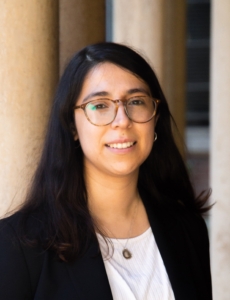
Fernanda Rojas Ampuero
More than 25% of the world’s urban population today live in slums (UN-Habitat, 2020). A common policy response to high poverty and the large share of slum dwellers in developing countries has been to provide low-income housing in city peripheries and suburban areas. However, it is unclear whether these policies benefit recipients: Despite the improvement in housing quality, families lose in terms of proximity to jobs, social networks, and access to public goods, such as schools and health provision. There is little evidence on how moving to peripheral neighborhoods, rather than upgraded housing on site, affects the long-run outcomes of residents and their children.
In the paper titled “Sent Away: The Long-Term Effects of Slum Clearance on Children,” Fernanda Rojas Ampuero (former UCLA PhD student, current post-doc at Harvard) and Felipe Carrera (Reed College), study the long-term effects of moving to a high-poverty neighborhood on the earnings and schooling of children. To do so, they examine the impacts of a large-scale slum clearance and urban renewal program, the Program for Urban Marginality, that was implemented during the Chilean dictatorship between 1979 and 1985.
The program made all the slum dwellers become homeowners, but whereas some slums were upgraded into neighborhoods (non-displaced), other slum dwellers were forcedly relocated to suburban areas (displaced). The authors use this variation between types of intervention to estimate the effects of the forced displacement on children’s outcomes. To empirically estimate the effects, they combine archival records and administrative data.
The authors find negative effects for children aged 0 to 18: Compared with the non-displaced, displaced children earned on average 10% less per month over their life. This negative effect is not associated with lower employment but with the quality of employment: Displaced children were more likely to work in temporary jobs and without a formal contract. In addition, displacement reduced children’s educational attainment: A displaced child lost 0.5 years of education and was 12% less likely to graduate from high school relative to a non-displaced child.
What explains these results? Almost 70% of the variation on children’s adult labor earnings can be explain by the characteristics of the municipalities of destination. The authors find evidence that lower social cohesion, measured as neighborhood fragmentation, reduced children’s schooling. In addition, their adult labor earnings were also affected by worse labor market access, measured as access to public transportation at the time of the intervention.
This paper contributes to the literature on neighborhood effects, with the novelty that it is the first to look at a developing country and long-term outcomes. Although families received a new housing unit, the results of this paper document that forcing families to live in peripheral and low-quality neighborhoods has long-term negative consequences, and it sheds light on which aspects of neighborhoods matter.

Former PhD Student Jingyi Huang Awarded the Allan Nevins Prize for Best Dissertation
/in News /by Jenail MobarakaFormer UCLA economics PhD student Jingyi Huang has been awarded the Allan Nevins Prize for the best dissertation in U.S. economic history from the Economic History Association. This prize is a notable recognition of Huang’s work and puts her on the path of major contribution to the field for years to come.
After completion of her PhD in economics at UCLA in 2021, Jingyi Huang was a postdoc at Harvard for the 2021-2022 school year and is now an assistant professor at Brandeis University.
More information about the Economics History Association can be found here.
Previous winners of the award can be found here.
Rosa Matzkin elected 2023 Econometric Society President
/in News /by Jenail MobarakaRosa Matzkin, Charles E. Davidson Professor of Economics, has been elected 2023 Econometric Society president.
The official announcement can be found here.
More about the Econometric Society can be found here.
PhD Student Giovanni Righi Awarded Doctoral Grant from the Washington Center for Equitable Growth
/in News /by Jenail MobarakaPhD student Giovanni Righi has been awarded a doctoral grant for 2022-2023 from the Washington Center for Equitable Growth.
More information about the grant can be found here.
Andres Santos and Oleg Itskhoki Named Econometrics Society Fellows
/in News /by Jenail MobarakaUCLA professors Andres Santos and Oleg Itskhoki were named Econometric Society Fellows.
More information about the Econometric Society can be found here.
The full list of fellows can be found here.
Oleg Itshokhi in Business Insider
/in News /by Jenail MobarakaUCLA Professor Oleg Itskhoki makes a cameo appearance in the Business Insider article “Fewer Chinese Students May Hurt the US Economy.”
The article can be found here.
Michael Rubens Named Young Economists´ Essay Award Winner by EARIE
/in News /by Jenail MobarakaMichael Rubens won the 2022 Young Economists´ Essay Award Winner presented by the European Association for Research in Industrial Economics (EARIE).
The Young Economists´ Essay Award is awarded annually to 3 authors under the age of 35, who are less than 5 years from their PhD defense, during EARIE’s annual conference.
More information about the award and EARIE can be found here.
Bloomberg Interview with Clark Medal Winner Oleg Itskhoki
/in News /by Jenail MobarakaOn August 2, 2022, Bloomberg interviewed UCLA Professor and recent Clark Medal winner Oleg Itskhoki.
The full interview can be read here.
The Economic Cost of OPEC’s Control of Global Oil
/in Research Spotlight /by Jenail MobarakaJohn Asker
By John Asker
OPEC, the global cartel of oil producing countries, led by Saudi Arabia and other Gulf states, controls approximately 50% of the world’s oil reserves. In (Mis)Allocation, Market Power and Global Oil Extraction (American Economic Review, 109(4), 1568-1615, 2019) and The Welfare Impact of Market Power: The OPEC Cartel (work in progress) Professor John Asker and coauthors examine the impact of OPEC’s market power in the modern era. Using detailed data on almost every known oil field in the world they build a detailed model of the cost structure underlying the world crude oil market. They use this model, combined with an economic theory of market equilibrium, to examine what the world market for crude oil would look like absent OPEC’s coordinating influence.
As one would expect, OPEC has a large impact on the world oil markets. That said, the magnitude of OPEC impact is startling. Between 1970 and 2014, Professor Asker’s research indicates that OPEC imposed a total economic cost of 5.7 trillion US dollars. For comparison, the comparable value of global output (GDP) in a single year is 77 trillion US dollars. If a typical recession is associated with a 3% drop in GDP, OPEC’s exercise of market power since 1970 has imposed an economic cost equivalent to one 2.5-year global recession.
The economic cost of this exercise of market power comes from two sources. First, when production from low-cost oil fields is reduced, higher cost fields substitute for at least some of that production. This imposes an economic cost through increasing the resource cost of existing production. Second, when market power is wielded, prices increase due to insufficient supply being delivered to meet demand. This means gains from trade can be unrealized (consumers have unmet demand despite their willingness to pay being higher than the cost of supplying them). About 85% of the economic costs of OPEC activity is estimated to come from gains from trade that are not realized due to OPECs desire to distort prices above competitive levels.
This work sheds light on the operation of the global oil market – which is economically significant in itself – but also underscores the macroeconomic impact of the exercise of market power generally. This contributes to an ongoing re-evaluation within economics of the role of microeconomic market imperfections (like market power) on aggregate economic outcomes. OPEC influence over the global crude market is a compelling example of how the accumulation of market power in globally significant markets can impose economic costs on society that reach macroeconomic significance.
Valentina Glaviano
/in Alumni Interview /by Jenail MobarakaValentina Glaviano grew up in Sacramento, California in a first-generation Italian American household. In high school, she was a stellar student and was admitted into plenty of colleges come senior year. The commitment process, however, was what she described as conservative. In addition to weighing academics, she had to choose a school that she could afford. As a California resident, UCLA became the obvious choice.
Coming into college, Valentina had tremendous clarity regarding what she wanted to pursue over the next four years. From a young age, she was set on working in the financial services industry because she viewed smart investing, along with education, as a massive equalizer that helps bring people out of poverty. Growing up, her parents were good investors, which allowed them to pay for her high school education at a private college prep school. In a similar manner, she too wanted to make a transformational difference in people’s lives by providing financial returns.
In order to pursue this goal, she chose to study economics. She was particularly attracted to UCLA’s economics program due to its focus on broad international themes. According to Valentina, at the time, “economic theory mainly focused on money supply” which is where UCLA was able to differentiate itself.
In order to maximize the value she could obtain from her degree, Valentina’s college experience was primarily focused on two things. First, of course, was schoolwork. She described the classes she took as being directly applicable to the work she would go on to do in asset management. The second thing she devoted attention to was her job, which she took up in order to pay for tuition and rent. To get the most out of her time, she opted to apply for a commissioned sales position instead of one with only an hourly wage. In this position, she picked up valuable skills, which would help her land a job in finance upon graduation. She treated each sale much like a challenge and learned that one must take a fearless approach. Valentina described this process as the “hunt” and stressed that in order to be successful, one must thoroughly enjoy hunting.
When it came time to look for a full-time job, her sales skills translated to conquering a fear of rejection and being relentless when networking with professionals in the financial services industry. Even though she was not a member of any business club like so many economics students are now, she was still able to build a network of connections on her own. This allowed her to get a job in investment management upon graduation, and she has been working in finance ever since. Such an industry is notorious for its long hours, especially for analysts fresh out of college. Her advice to avoid feeling overwhelmed is that one must first “work in finance for the right reasons”, meaning they must actually want to help people. Those who enter for the lucrative compensation “rarely succeed long term”.
Valentina’s own passion for helping others through finance continues to motivate her through her busy workdays. Valentina wakes up at around 5:30 am, starting her day off with an early morning workout. If she finds herself in the office that day, then she will generally be attending several back-to-back meetings in which she meets with team members on the various projects that she is leading. On the other hand, if she is traveling that day, she expects to primarily meet with prospective clients to demonstrate why her firm’s outsourced CIO approach aligns with the missions and values of the client. She emphasized the extensive research necessary to prepare for her meetings, including material that might sound familiar to business economics students. Valentina pulls balance sheets, income statements, and annual reports in order to analyze metrics like the variability of income, the stress of the balance sheet, and spending deficit. Ultimately, she ends the work day feeling fulfilled from rising up the challenge of her job and from the satisfaction that her work is helping improve the life of many others.